• US equity indices rise to new highs, leading the ways was the Nasdaq up over 3.5% overnight.
• The Federal Reserve left rates unchanged at 3.75% Thursday morning as expected. The new Fed chair Warsh is clearly moving the central bank away from the old school transparency of frequently signalling their thoughts on policy to a philosophy around placing the reasonability back on markets providing insights via data releases, the fed doesn’t then need to constantly be telling the markets what its thinking. Under this previous framework, too much information can muddy the waters and confuse markets and increase volatility.
• Antipodean currencies are up over 1.0% in overnight trading.
• Odds of an extra hike by the RBNZ rose last week post NZ y/y inflation read. It’s possible we may see another rate rise at the September meeting as well as either the late Oct or December meetings.
• The Bank of Japan (BoJ) are set to meet today when they are predicted to hold interest rates at 1.0%.
• The Bank of England leaves cash rate unchanged at 3.75% as expected.
• The strongest main board currency over July has been the British Pound (GBP) while the worst performing currency is the US Dollar (USD).

The mighty New Zealand Dollar (NZD) squeezed higher in New York trading overnight off 0.5780 numbers to post 0.5880 heading into Friday. We were correct in our earlier view the kiwi could pick up bids, pushing past 0.5850 both 50% and 61.8% fib levels to a 7-week high. If the NZD can sustain this move it would cement further upside bias towards pivotal resistance at 0.6000. Earlier in the week the Fed left interest rates unchanged at 3.75% offering nothing solid for further tightening into the years end. Next week’s NZ job numbers and unemployment release could surprise to the upside.
The current interbank midrate is: NZDUSD 0.5876
The interbank range this week has been: NZDUSD 0.5760- 0.5883
As we expected, we saw a nice run by the New Zealand Dollar (NZD) continue over the week against the Australian Dollar (AUD) to post 0.8370 in early morning trade before settling around 0.8360 areas. The kiwi didn’t quite have the energy to close above last week’s 0.8380 – retesting this area and dropping back. A lift above 0.8400 suggests a significant structural shift and a possible steer higher if the RBNZ can remain hawkish on rates increases over the rest of 2026. Certainly, we should get a better look at this when next week’s NZ unemployment numbers release. Meanwhile Australian 2nd quarter inflation published lower than expected at 3.8% vs 4.0% with the pace of inflation cooling putting a near term cash rate rise in jeopardy.
The current interbank midrate is: NZDAUD 0.8362 AUDNZD 1.1949
The interbank range this week has been: NZDAUD 0.8250- 0.8375 AUDNZD 1.1940- 1.2120
Bank of England (BoE) members voted 6-3 in favour of a leave at 3.75% interest rate with the consensus being the energy shock in the UK remains uncertain with inflation risks are tilted to the upside. The door is still open for a hike at their next meeting on September 17th. The New Zealand Dollar (NZD) rose to 0.4375 (2.2850) post the BoE meeting the 8-week high in the cross before settling at 0.4365 (2.2900). Next week’s NZ employment data is the only economic release in the pair and could continue to push the NZD higher is unemployment rises above 5.3% in June.
The current interbank midrate is: NZDGBP 0.4363 GBPNZD 2.2920
The interbank range this week has been: NZDGBP 0.4335- 0.4376 GBPNZD 2.2851- 2.3065
The Australian Dollar (AUD) climbed in overnight NY markets to reach 0.7030 against the US Dollar (USD), the 5th consecutive week the Aussie has outperformed pushing above key resistance at the big figure 0.7000. If the AUD can hold above here, we could see setbacks well supported and bullish continuation. Earlier the Federal Reserve left their interest rate unchanged at 3.75% which was widely expected, however the new Fed chair left markets a little perplexed with his new shift away from transparency of future monetary policy instead letting the market interpret incoming data. Markets immediately saw this as uncertainty with punters selling risk. Bank holiday in Australia Monday.
The current interbank midrate is: AUDUSD 0.7024
The interbank range this week has been: AUDUSD 0.6921- 0.7032
The Australian Dollar (AUD) hasn’t been able to hold the 0.5265 (1.9000) zone against the British Pound this week falling back to 0.5200 (1.9230) as the currency broke below key trendline support at 0.5250 (1.9050). Australia’s inflation shrank in June to 3.8% from 4.0% supporting the case for an interest rate hold on August 11th. Meanwhile the Bank of England (BoE) kept their interest rate on hold at 3.75% in a 3-6 vote, clearly the central bank is edging towards a hike mid-September. The banks inflation forecast is expected to be around 3.0% in the second half of the year well ahead of the 4% threshold so the measure of a hike will be largely based on energy price factors. We view a possible retest of the zone around 0.5160 (1.9370) in the coming couple of weeks.
The current interbank midrate is: AUDGBP 0.5217 GBPAUD 1.9168
The interbank range this week has been: AUDGBP 0.5201- 0.5264 GBPAUD 1.8996- 1.9225
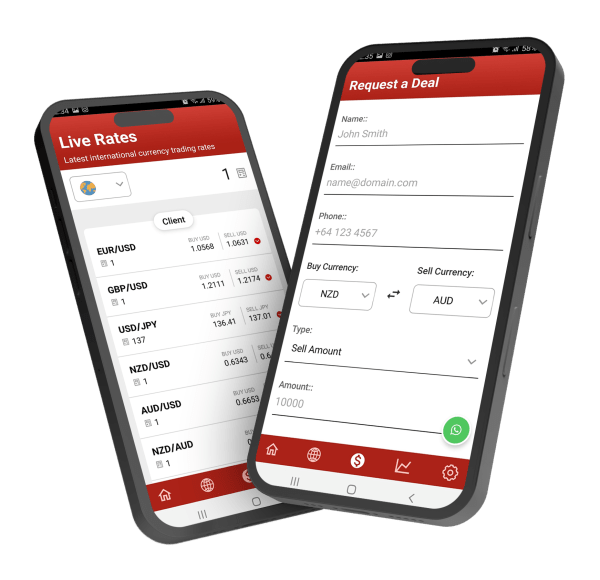
The Direct FX app has been updated to include currency charts and the highs/lows for the past 24 hours. Along with our regular market commentary, the Direct FX app also has live indicative market mid rates and a currency conversion calculator. Use the relevant link below to take you directly to the version for you, or simply search for it in the App store / Play store.