• The Australian economy grew at an annual rate of 2.5% in the March quarter the same as the December quarter.
• RBA governor Bullock, assistant governor’s Hunter, and Kent have appeared before the Senate Committee facing scrutiny and interrogation over the central banks 3 consecutive rate increases after GDP for the 1st quarter 2026 came in much lower at 0.3% markets were expecting. We see a reasonable chance the economy may drop into a technical recession when numbers for the second quarter publish in September.
• Trump has told aides he would only end the ceasefire if the US military had fatalities from the Tehran. Discussions around opening the Strait of Hormuz are ongoing, it could be months before Iran agree to dispose of enriched uranium.
• Words from Trump via social media: The US is in the middle of final negotiations to end the Iran war.
• Bailey has been on the wires leaning cautiously dovish saying the geopolitical risks are temporary.
• The US Dollar (USD) has been the strongest performer this week on the main board while the Japanese Yen (JPY) was the worst performer 3 week’s running.

The New Zealand Dollar (NZD) has held prices above 0.5850 against the US Dollar (USD) over the past day or so with “risk” markets mildly supportive. We look ahead to US Non-Farm Payroll releasing tonight when numbers could print soft, In the meantime the kiwi could chop around current levels. Technically the cross has dropped below the 100-day moving average on the daily which could imply a retest of the level around 0.5810 the 7-week low.
The current interbank midrate is:NZDUSD 0.5867
The interbank range this week has been:NZDUSD 0.5851- 0.5989
The Australian GDP release this week has been our only economic data in the NZD/AUD cross, it didn’t disappoint. March quarter growth printed at 0.3% much lower than the 0.5% markets were predicting putting the spotlight on Governor Bullock and the central Bank’s recent cash rate hikes in February, March and May. Some market pundits are suggesting the RBA has been too aggressive with policy amid weakening domestic demand, slow employment and moderating inflation. Bullock sees it differently, reinforcing inflation is expected to rise further holding her view of a tightening bias. The New Zealand Dollar (NZD) has given back around 50% of last weeks gains over the week against the Australian Dollar (AUD) trading into Friday around 0.8230 (1.2150) levels.
The current interbank midrate is:NZDAUD 0.8231 AUDNZD 1.2138
The interbank range this week has been:NZDAUD 0.8220- 0.8341 AUDNZD 1.1988- 1.2165
The New Zealand Dollar (NZD) extended its mid-week slump against the British Pound (GBP) dropping to 0.4365 (2.2900) levels into Friday where its consolidated. Bank of England’s (BoE) Governor Bailey spoke this week about being caught between rising inflation and soft growth and avoiding a recession in the later part of 2026. He speaks again tonight and could be less hawkish on policy than he has been. Price sits the bottom of the recent bull channel signalling we could see a reversal off current levels and a retrace back to 0.4400 (2.2730) in the coming sessions.
The current interbank midrate is:NZDGBP 0.4370 GBPNZD 2.2883
The interbank range this week has been:NZDGBP 0.4365- 0.4451 GBPNZD 2.2466- 2.2905
The Australian Economy grew by a miserable 0.3% in the first quarter of 2026 ending March which has raised questions around recent RBA hikes. The AUD has dropped back from midweek’s 0.7180 to clock 0.7120 in early Friday. The poor growth number has coincided with the central bank’s decision to lift the cash rates in February, March, and May. Given unemployment rises and inflation moderating they may have been too excited, perhaps the economy only needed 1 or 2 hikes, especially with consumer spending subdued. However, the RBA remain staunchly hawkish. US Non-farm Payroll prints tonight and will create the usual volatility.
The current interbank midrate is:AUDUSD 0.7127
The interbank range this week has been:AUDUSD 0.7121- 0.7190
The Australian Dollar (AUD) extended declines midweek reaching 0.5305 (1.8850) against the British Pound (GBP) but still within recent range moves. Australian GDP for the 1st quarter of 2026 came in light at 0.3% instead of market forecasts of 0.5% raising recession questions. Australia’s head of economic research says high oil/energy prices have shattered confidence and may stunt spending over the rest of 20206 if inflation rises further. Questions around 3 hikes by the RBA have well and truly affected the cost of living. However, the RBA remains staunchly hawkish on interest rates. Next week sees a light calendar and geopolitical headlines dominating.
The current interbank midrate is: AUDGBP 0.5308 GBPAUD 1.8839
The interbank range this week has been:AUDGBP 0.5306- 0.5343 GBPAUD 1.8716- 1.8844
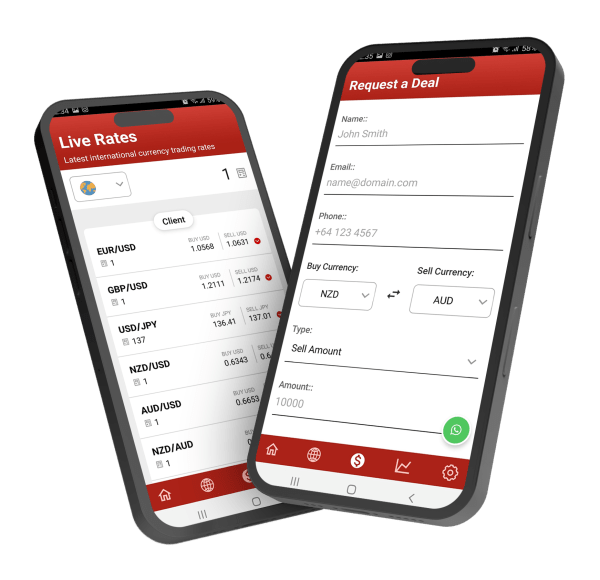
The Direct FX app has been updated to include currency charts and the highs/lows for the past 24 hours. Along with our regular market commentary, the Direct FX app also has live indicative market mid rates and a currency conversion calculator. Use the relevant link below to take you directly to the version for you, or simply search for it in the App store / Play store.