The ongoing energy supply and price crisis has been going on for more than six months, but it has become a cumulative and existential threat to energy dependent Countries, in both Europe and Australasia. The cumulative threat is soaring prices, feeding through to elevated levels of inflation, adding further pressure to already testing bond market. Europe has been in the limelight over the last week, particularly the French markets, with yields hitting highs not seen in more than 20 years. The political upheaval is a product of fiscal distress and the lack of any budget process, due to a feckless minority Government. All eyes remain on Europe, their bonds and currency, while local markets remain struck by the same crisis stick.

The NZ Dollar took an absolute bath over recent days, falling from above 0.5900 earlier in September to trade below 0.5600, early October. The energy/inflation crisis is hitting energy vulnerable Countries hard, particularly Australia and New Zealand. The war in the Middle East is hammering energy supply chains, thus price and availability. This in turn leads to elevated inflation and thus interest rates. The NZ economy has shown how susceptible it is to the energy crisis, lacking any energy independence. There does not appear to be any imminent solutions so expect further currency pressure.
Current Level: 0.5602
Support: 0.5580
Resistance: 0.5640
Last week's range: 0.5584- 0.5686
The AUD was struck hard by the shockwaves coming from the Middle East, in terms of energy supply and thus pricing. Australia is particularly vulnerable to energy supply constraints, as is NZ, with little energy independence. The rising problem of inflation, was recognised by the RBA last week, resulting in a further 25 basis point rate rise. The RBA warned of further inflationary pressures and possible future rate rises. The cross rate fell back to 0.8020, with the only saving grace, an almost as weak KIWI.
Current Level: 0.8030 (1.2453)
Support: 0.8030 (1.2320)
Resistance: 0.8115 (1.2450)
Last week's range: 0.8041- 0.8120 (1.2315- 1.2436)
The UK remains extremely exposed to energy supply and price volatility, as they are no longer energy rich, due to the shut-down of the North Sea reserves. The UK is heavily reliant on external supply and has thus been hit hard by the ongoing energy crisis. The NZD/GBP cross rate has traded around 0.4250, not overly impacted, as both the UK and NZ remain energy dependent and exposed.
Current Level: 0.4235 (2.3612)
Support: 0.4220 (2.3400)
Resistance: 0.4275 (2.3700)
Last week's range: 0.4233- 0.4283 (2.3343- 2.3619)
The energy and inflation crisis has been damaging to Europe, which is dependent almost completely on external supply of energy. This has manifested in the form of surging inflation and bond yields. Bond yields are a real problem, considering the existential threat high bond yields pose, to massively overindebted nations. France in particular is suffering, with bond yields reaching levels not seen in more than 20 years. France is suffering a budget crisis, fiscal problems and an uncertain political environment. The EUR was smashed by markets over the last week, as a consequence, and the NZD/EUR cross spiked to 0.5000 despite weakness in the KIWI.
Current Level: 0.4990 (2.0040)
Support: 0.4945 (1.9940)
Resistance: 0.5015 (2.0220)
Last week's range: 0.4959- 0.5008 (1.9968- 2.0163)
The impact of the current energy crisis has been devastating to the Australian economy. This has reversed the recent downward trend in inflation, with inflation spiking back to 4.0%, after tumbling to 3.5%. The RBA acted immediately, raising interest rates by 25 basis points, with the promise of more, if inflations upward trajectory continues. This was not received well in currency markets, with the AUD crashing to back towards 0.6900, and remaining under pressure. An inflation gauge released overnight, showed inflation was not as rampant as the CPI reading had pointed to, allowing the AUD to spike back above 0.6950.
Current Level: 0.6970
Support: 0.6880
Resistance: 0.7100
Last week's range: 0.6902- 0.7038
The AUD/GBP cross-rate has traded between 0.5300 and 0.5350, in the last few days. Both currencies have been under extreme pressure, due to the energy/inflation crisis, and remain vulnerable. Keep a close eye on Geo-Political developments in the Middle East and local bond markets. The GBP remains more vulnerable as their energy supplies are almost totally imported.
Current Level: 0.5272 (1.8968)
Support: 0.5235 (1.8820)
Resistance: 0.5315 (1.9100)
Last week's range: 0.5231- 0.5308 (1.8837- 1.9114)
The EUR was trampled by the energy inflation crisis, but so was the AUD, with similar challenges. The AUD/EUR spiked above 0.6200, as the EUR tumbled to levels not seen since the COVID crisis. Close attention will be paid to the European bond market, this week, especially the French. French political upheaval, fiscal crisis and more pose a serious threat to France and the EUR.
Current Level: 0.6210 (1.6103)
Support: 0.6155 (1.6065)
Resistance: 0.6225 (1.6250)
Last week's range: 0.6122- 0.6198 (1.6134- 1.6333)
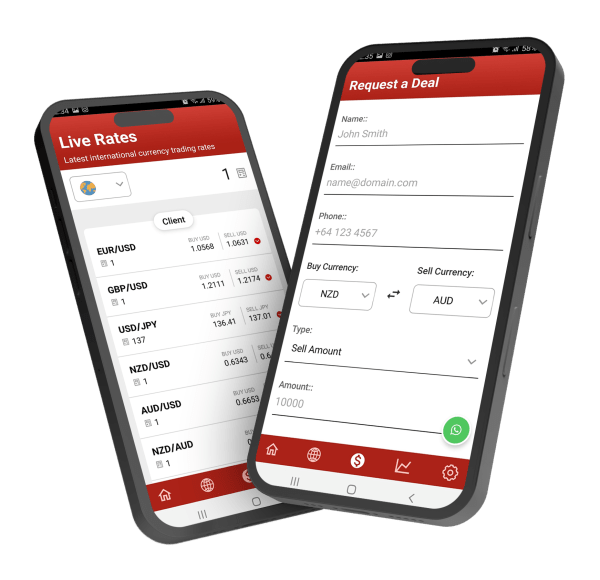
The Direct FX app has been updated to include currency charts and the highs/lows for the past 24 hours. Along with our regular market commentary, the Direct FX app also has live indicative market mid rates and a currency conversion calculator. Use the relevant link below to take you directly to the version for you, or simply search for it in the App store / Play store.