• Markets are expecting a quiet week of economic data which usually means moves will be based on geopolitical headlines.
• Chinese CPI y/y printed at 1.2% Monday after markets predicted a 0.9% print in April with most of the number driven by rising oil and commodity prices.
• Trump rejects Iran peace deal calling it “totally unacceptable”. The Strait of Hormuz is still the main attraction with the body of water accounting for roughly 20% of the worlds oil flows. The details of the proposal weren’t public, but Trump viewed the terms as far from acceptable.
• US Inflation this week is predicted to come in around 3.7% up from 3.3% in March, likely to cause market swings.
• The British Pound (GBP) is the strongest performer this week while the Japanese Yen (JPY) has been the worst performer.

The New Zealand (NZD) has been supported by the 100-day moving average off the Monday open with price bouncing off 0.5940 against the US Dollar (USD) to reach 0.5968 into morning trade. A slightly softer greenback based on global dynamics has seen the kiwi push just shy of late Feb highs. US CPI tomorrow expected to come in at 3.7% off 3.3% should give us proper clues as to how the Fed deal with policy going forward. If inflation prints higher, we could expect the Fed to take a different path to raising rates. At the moment a hike is priced in for late this year, but markets could begin to price in earlier hikes. A geopolitical “risk on” shift could move the cross to 0.6000.
Current Level: 0.5962
Support: 0.5910
Resistance: 0.6000
Last week's range: 0.5856- 0.5990
The New Zealand Dollar (NZD), Australian Dollar (AUD) cross has settled around the 0.8225 (1.2150) zone early this week after a breakout from the long term trendline last week through 0.8210 (1.2180). With no economic data on the docket to publish we should see moves dictated by geopolitical headlines, any risk on sentiment has been supporting the kiwi. That said the overall momentum in the cross is still skewed to the downside largely supported by the recent RBA hike to 4.35%.
Current Level: 0.8231
Support: 0.8170
Resistance: 0.8250
Last week's range: 0.8183-0.8248
Current Level: (1.2141)
Support: (1.2120)
Resistance: (1.2240)
Last week's range: (1.2123-1.2219)
The New Zealand Dollar (NZD) closed the week around 0.4375 (2.2860) after giving back late gains from 0.4400 (2.2750) levels against the British Pound (GBP). We said earlier the NZD will struggle to retest the 0.4405 (2.2700) zone- we were correct with risks still tilted to the downside for the NZD geopolitically speaking. The Bank of England (BoE) estimates the costs of ongoing quantitative easing will cost the government around 125B; this is a combo of the post GFC crisis and covid. This could lead to higher interest rates in the long run. We think a retest of the area around 0.4365 (2.2900) is possible this week.
Current Level: 0.4382
Support: 0.4350
Resistance: 0.4400
Last week's range: 0.4333-0.4394
Current Level: (2.2820)
Support: (2.2750)
Resistance: (2.3000)
Last week's range: (2.2754-2.3075)
The New Zealand Dollar (NZD) is slightly higher off the weekly open price of 0.5060 (1.9755) into Tuesday against the Euro (EUR) as the kiwi tries to retest last week’s 0.5085 (1.9660) the 8-week high the continuation of the recent trendline. The European Central Bank (ECB) continues to provide upside bias in the cross with ongoing concerns in the Strait of Hormuz driving the “safe haven” sells. The ECB are still pricing in hikes with persistent energy related inflation pressures.
Current Level: 0.5063
Support: 0.5015
Resistance: 0.5080
Last week's range: 0.5014-0.5086
Current Level: (1.9751)
Support: (1.9660)
Resistance:(1.9940)
Last week's range: (1.9658-1.9941)
The Australian Dollar (AUD) sits just below the long term high at 0.7250 this morning against the US Dollar (USD) pushing higher off the opening bell as risk indicators turn positive. The recent RBA hike to 4.35% is still also underpinning the Aussie as they maintain a tightening bias with inflation in Australia remaining elevated. With China inflation printing higher than expected y/y in April this also has offered support for the AUD. However, recent breakdowns in Iran negotiations and ongoing political uncertainty could easily derail topside moves. Watch for the Xi/Trump summit in Beijing midweek for moves.
Current Level: 0.7242
Support: 0.7150
Resistance: 0.7300
Last week's range: 0.7134- 0.7277
The Australian Dollar (AUD), British Pound (GBP) cross trades a touch higher than the weekly open into Tuesday sessions with the Aussie set to break resistance around 0.5340 (1.8730) this week if “sentiment’ allows. Lower (BoE) Bank of England growth forecasts and the news of a 125B Pound QE bill to be funded by the government could stretch the GBP especially given the recent RBA hike to 4.35% underpinning AUD moves.
Current Level: 0.5323 (1.8786)
Support: 0.5180
Resistance: 0.5360
Last week's range: 0.5277-0.5338
Current Level: (1.8786)
Support: (1.8660)
Resistance: (1.9300)
Last week's range: (1.8732-1.8949)
The Australian Dollar (AUD) inches closer to the long term high at 0.6200 (1.6125) this morning against the Euro (EUR), the cross weaker off the open with risk conditions giving the Aussie a boost. A breakdown in Iran/US negotiations over the Strait of Hormuz could put downside pressures on the AUD this week, especially with a lack of economic data publishing.
Current Level: 0.6149
Support: 0.5970
Resistance: 0.6240
Last week's range: 0.6107-0.6179
Current Level: (1.6262)
Support: (1.6020)
Resistance: (1.6750)
Last week's range: (1.6182-1.6372)
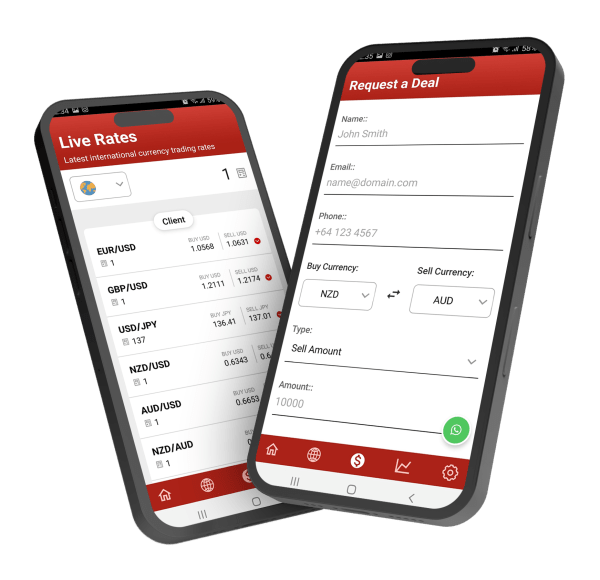
The Direct FX app has been updated to include currency charts and the highs/lows for the past 24 hours. Along with our regular market commentary, the Direct FX app also has live indicative market mid rates and a currency conversion calculator. Use the relevant link below to take you directly to the version for you, or simply search for it in the App store / Play store.