• US Holiday Labour Day creates thin market conditions Monday.
• The US/Iran missile strikes in the Strait of Hormuz is keeping markets on high alert with massive, prolonged supply disruptions.
• Equities extended losses Monday as hot Non-Farm Payroll (NFP) raises odds of Federal Reserve rate hikes. The key catalyst is inflation triggering a hawkish Fed. Markets see chances of a rate hike at the September meeting as roughly 60%
• The Reserve Bank of New Zealand hiked rates from 2.50% to 2.75% Wednesday saying a gradual tightening is preferred over more aggressive hiking later. This is a fine line between containing offshore inflation and avoiding damage to an already challenged economy. Inflation is at 4.1% well over the RBNZ’s 1-3% band. Removing fuels from the inflation number its 2.9% for the second quarter.
• Oil prices have risen to reach 91.50 this morning with $100.00 coming back into the picture. This is clearly threatening inflation and central bank rate decisions and ultimately the broader cost of living crisis.
• The strongest main board currency last week has been the Japanese Yen (JPY) while the worst performing currency was the New Zealand Dollar (NZD) falling around 0.6% against the crosses.

In thin US holiday markets, the New Zealand Dollar (NZD) hovers around the 0.5880 area against the US Dollar (USD). Friday’s Non-Farm Payroll positive jobs number confirmed a hawkish Fed and higher chances they will hike interest rates at their Sep 17th Meeting. Ongoing event risk in the Strait of Hormuz is also still causing investors to remain tentative, especially with oil prices souring into the 90’s per barrel this morning elevating inflation. US CPI will be carefully analysed when it prints Sat morning NZT. In the meantime, topside moves by the kiwi look capped.
Current Level: 0.5883
Support: 0.5840
Resistance: 0.6000
Last week's range: 0.5801- 0.5928
The New Zealand Dollar (NZD), Australian Dollar (AUD) has retested the long-term low this morning at 0.8145 (1.2280) of May 2012. A daily breakout through this level usually represents further momentum to continue lower, we will know over the coming hours. There is absolutely no significant data releasing on the economic docket this week suggesting moves could be more of the same.
Current Level: 0.8142
Support: 0.8030
Resistance: 0.8375
Last week's range: 0.8139-0.8267
Current Level: (1.2272)
Support: (1.1940)
Resistance: (1.2450)
Last week's range: (1.2095-1.2286)
The New Zealand Dollar (NZD) has reversed some of last weeks gains in thin trading Monday against the British Pound (GBP) dropping to 0.4340 (2.3040). The Bank of England’s relatively hawkish stance should keep the GBP bid considering the RBNZ will moderate any hikes if any over 2026. Stiff support on the chart is at the 0.4335 (2.3070) zone, a play below this area could suggest a structural shift. UK monthly GDP Friday is the only tier 1 data publishing this week.
Current Level: 0.5058
Support: 0.4335
Resistance: 0.4385
Last week's range: 0.4301-0.4374
Current Level: (1.9770)
Support: (2.2800)
Resistance: (2.3070)
Last week's range: (2.2862-2.3246)
Diverging central banks keep the New Zealand Dollar (NZD) on the backfoot against the Euro (EUR) of late with prices off Monday’s open continuing last week’s bear momentum to 0.5055 (1.9780). The ECB meet Thursday and are widely expected to raise rates from 2.40% to 2.65% with the energy crisis in play affecting inflation driven consumables. The ECB statement will be closely watched with focus on Legarde’s guidance to future tightening. Prices around the 0.5060 (1.9760) zone could look attractive around the weekly close.
Current Level: 0.5058
Support: 0.5050
Resistance: 0.5120
Last week's range: 0.5015-0.5110
Current Level: (1.9770)
Support: (1.9520)
Resistance:(1.9800)
Last week's range: (1.9571-1.9938)
The Australian Dollar (AUD) seems unstoppable of late against the mildly supportive US Dollar (USD). Prices tracked to 0.7220 in late NY sessions the highest level since 14 May this year. With the Fed now expected (probability 60.0%) to hike on September 17th to 4.0% moves higher could be restricted. Certainly, with US inflation releasing at the end of the week, we could see the cross retrace somewhat. That said we think resistance at 0.7250 could hold.
The Australian Dollar (AUD) looks to extend the climb from late August’s 0.5210 (1.9190) against the British Pound (GBP) having clocked new levels through 0.5320 (1.8800) resistance of late. Expectations of the RBA raising rates have given the Aussie a boost lately with strong growth, consumer spending and underlying inflation all increasing chances on September 29. The level around 0.5350 (1.8690) is the next target.
Current Level: 0.5329
Support: 0.5280
Resistance: 0.5340
Last week's range: 0.5271-0.5334
Current Level: (1.8765)
Support: (1.8720)
Resistance: (1.8930)
Last week's range: (1.8746-1.8970)
We are seeing incredible levels in the Australian Dollar (AUD), Euro (EUR) cross at the moment clocking fresh highs of 0.6210 (1.6100) this morning reaching November 2024 highs. Although the ECB has been more supportive of economic outlook German Industrial Production fell 1.1% in July after expectations of a 0.1% rise. The ECB should raise the cash rate Thursday 25 points to 2.65% citing growth headwinds and higher inflation forecasts.
Current Level: 0.6208
Support: 0.5950
Resistance: 0.6025
Last week's range: 0.6153-0.6207
Current Level: (1.6108)
Support: (1.6600)
Resistance: (1.6800)
Last week's range: (1.6111-1.6251)
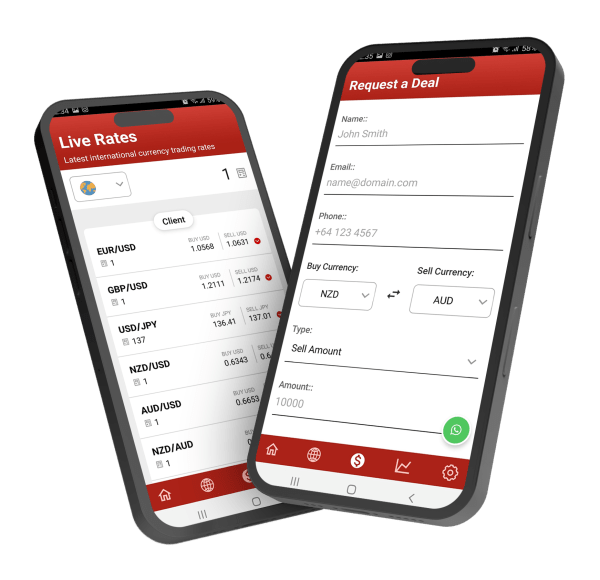
The Direct FX app has been updated to include currency charts and the highs/lows for the past 24 hours. Along with our regular market commentary, the Direct FX app also has live indicative market mid rates and a currency conversion calculator. Use the relevant link below to take you directly to the version for you, or simply search for it in the App store / Play store.